

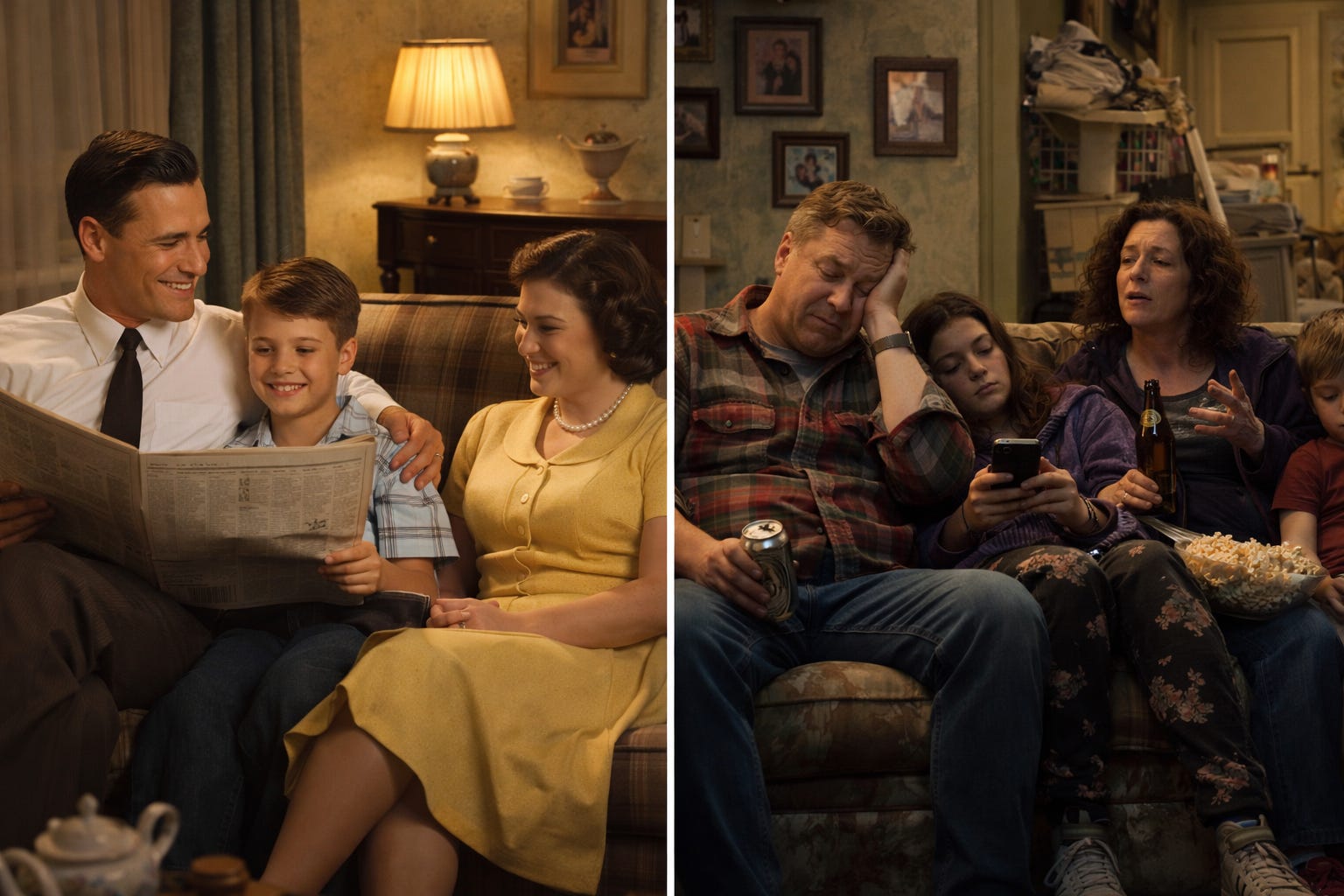
When I was young, I remember adults who seemed to hold things.
Not perfectly. Not kindly all the time. But steadily. They argued without unraveling. They disagreed without collapsing into spectacle. They carried responsibility with a weight that felt real, even when I did not yet understand it.
As a child, I assumed that was simply what adulthood meant.
Over time, that assumption began to loosen. Authority started to feel thinner. Decisions were made quickly, but rarely held. Confidence grew louder, but not deeper.
I do not think this happened because people became worse. I do not think it happened because anyone failed on purpose. I wonder if adulthood itself was reshaped by the systems that produced it.
When speed is rewarded over care, maturity becomes inconvenience. When certainty is prized above understanding, humility looks like weakness. When complexity slows outcomes, it gets bypassed rather than carried.
We still tell people to “be adults,” but we no longer seem to agree on what that means. Somewhere along the way, adulthood stopped being about responsibility for others and became about managing exposure for oneself.
What I notice most is not cruelty, but avoidance. The inability to stay present when something becomes uncomfortable. The impulse to defer, deflect, or perform rather than hold.
I do not write this as accusation. I write it as recognition.
If systems shape people, then adulthood is one of their outputs. And if that is true, the question is not why adults feel different now - it is what conditions we have been asking them to survive under.
I am still sitting with adulthood once modeled, and what it has been trained to become.