

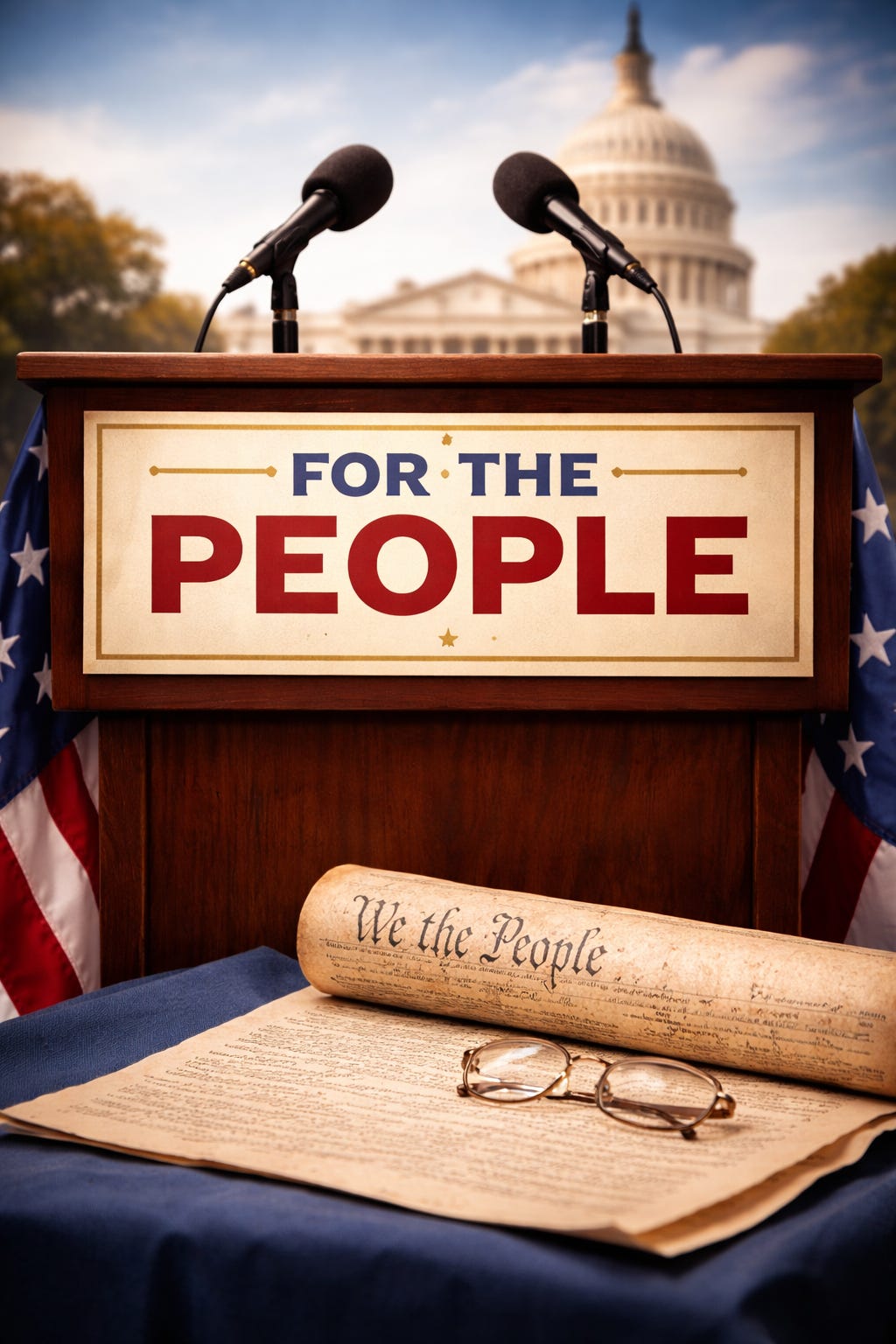
If the claim is protection, the standard must be universal. A government does not earn legitimacy by invoking who it claims to protect. It earns legitimacy by who it actually protects.
“For the children” has been used as a moral shortcut. A way to bypass scrutiny by narrowing the circle of concern even as power expands. But protection that applies selectively is not protection. It is preference.
A constitutional system already has a valid rallying standard, for the people. That standard is not symbolic. It is measurable. If a policy harms some people to benefit others, it fails. If it protects children while violating the rights of adults, it fails the standard. If it claims safety while producing fear, silence, or death, it fails.
Children do not require a separate moral category to be protected. They require a system that protects everyone because systems that exclude adults ultimately exclude children as well. The Constitution does not grant rights for children, for citizens, or for the approved. It guarantees protections to the people. That is the standard.
Likewise, claims made “for the country” are only legitimate when they preserve the conditions that make a country worth maintaining: equal protection, due process, restraint on force, and accountability for power. A nation is not strengthened by violating its own principles It is weakened. The rallying cry does not need to be emotional. It needs to be accurate.
If an action cannot be justified for the people, it cannot be justified at all.