

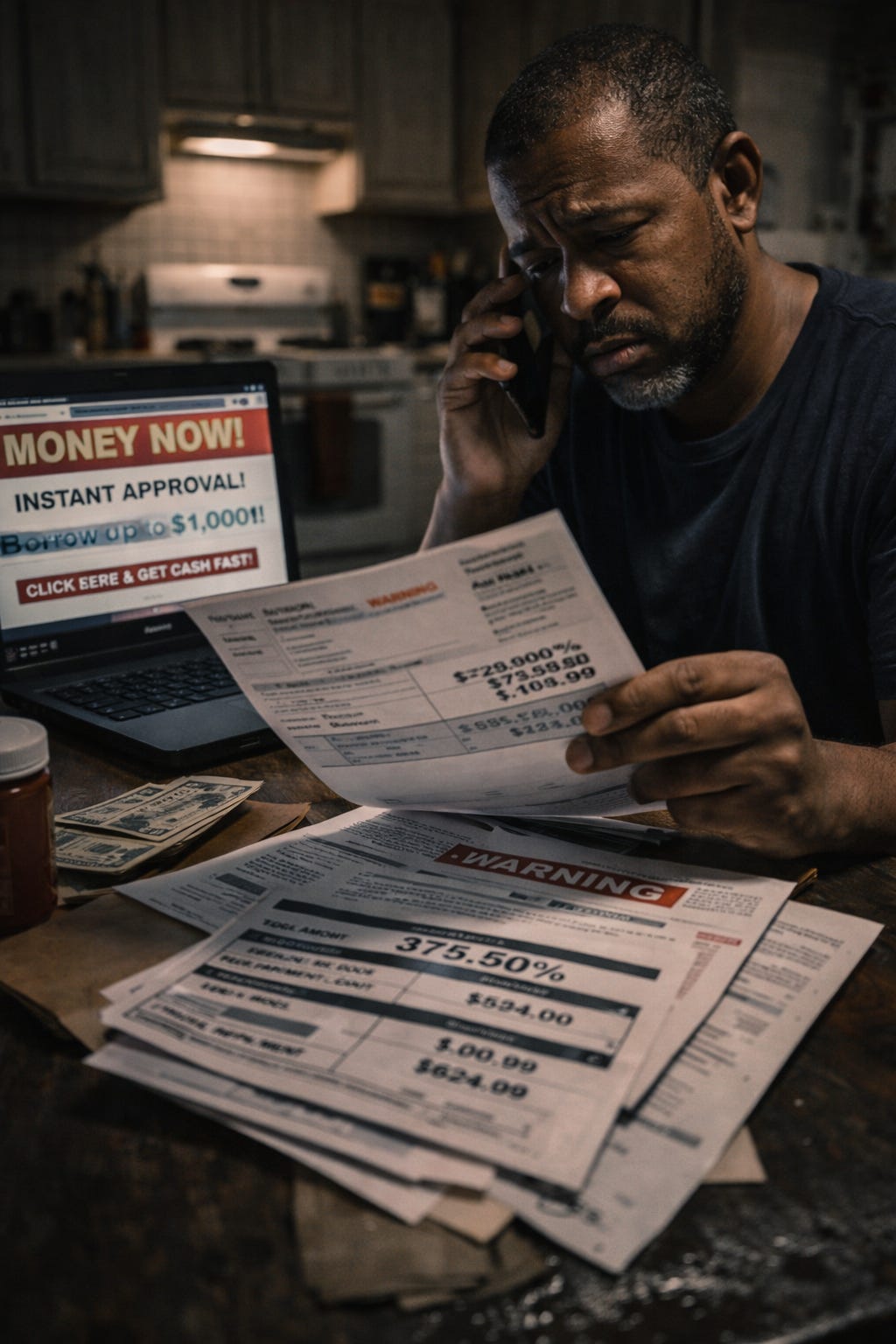
Fraud is usually talked about as a breakdown. A violation. A deviation from how the system is supposed to work. A bad actor stepping outside the rules. That framing is too generous.
In the United States, fraud is treated like an exception even when it behaves like a pattern. It appears in too many sectors, institutions, business models, and layers of public life to keep pretending it is merely accidental. Corporate fraud. Financial fraud. Consumer fraud. Political fraud.
Legal grift dressed up as innovation. Illegal grift cleaned through paperwork and influence. Everywhere you look, the same deeper logic keeps surfacing. The lie pays. The truth costs. The public eats the difference. That is the failure.
A system that rewards deception, complexity, short-term gain, and low accountability will not produce integrity at scale. It will produce strategic dishonesty and then pretend each exposure is an exception instead of evidence of the design. That is what this country keeps doing.
A scandal breaks. A scheme is exposed. A company is caught. A market crashes. A public official lies. A whole industry is shown to be gaming the public, and the system responds with ritual surprise, selective outrage, and a promise to look into it, right before the incentives settle back into place and the next version begins.
That is not surprise. That is maintenance.
If cheating is more profitable than honesty, if opacity protects profit better than clarity, if size shields consequence, if legal departments can turn predation into policy language, if fines are cheaper than reform, if captured regulators can be waited out, and if the public can be told to absorb the damage again, then fraud is not a glitch in the machine.
It is one of the machine’s outputs.
That is what makes the whole national self-image feel rotten. We talk as if this is a capitalist merit system, as if competition, productivity, and value creation determine success. But look closer and the picture gets filthier.
How much of what gets rewarded is actual value, and how much is grift with better branding. How much is productive exchange, and how much is legal and illegal extraction passing itself off as intelligence. How much of the economy is built on honest contribution. How much is built on exploiting asymmetry, burying truth, gaming systems, and offloading losses onto people who were never given a fair chance to consent in the first place.
That is not a healthy market. That is a culture of fraud with a business vocabulary. And when the fraud gets large enough, the insult deepens. Too big to fail. Too connected to prosecute. Too systemically important to collapse. Which means, in plain language, go ahead and hurt the public again.
The people will cover it. They always do. They covered it last time. They will cover it this time. And if they complain, tell them the alternative is worse. Tell them stability requires sacrifice. Tell them realism is painful. Tell them to be adults about it. Then hand the bill downward and call it recovery.
That is not accountability. That is organized impunity.
The political layer matters too, because public dishonesty did not stay contained to marketing copy, fine print, or boardroom language. It spilled outward until reality itself became negotiable. The lie did not need to be convincing. It only needed to be repeated, defended, tribalized, and made familiar.
By 2016, the country was no longer just tolerating strategic deception. It was showing a growing willingness to say, in effect, I do not care whether it is true. I care that it serves what I want to believe. That was not the beginning of the problem. It was a revealing escalation of it.
A society that had already normalized deception in business and governance was now normalizing open indifference to truth itself. The result was not confusion. The result was permission. And permission changes everything.
Once people accept that the lie is just another tactic, truth loses its status as shared ground and becomes one more thing to manipulate. Once that happens, fraud gets easier everywhere. In politics. In media. In finance. In commerce. In public life.
Because fraud does not survive only on greed. It survives on exhausted populations, weakened standards, repeated exposure, and a culture trained to shrug and say that is just how things work. That shrug is part of the design.
So is the complexity. So is the fine print. So are the layered transactions, hidden fees, distorted disclosures, legal shields, endless terms, procedural mazes, and institutional overlap that make blame hard to pin down.
Complexity is not always there because reality is complicated. Often it is there because obscurity is profitable. The harder a system is to understand, the easier it is to manipulate people inside it, and the harder it is for them to prove where the theft occurred.
That is why fraud belongs on this shelf. Not because some people are dishonest. People have always been dishonest. Fraud becomes a Failure Point when the structure itself rewards lying, cushions consequence, absorbs scandal, and keeps producing the same outcomes under new names.
And the human cost is not abstract. People lose savings. Lose homes. Lose care. Lose wages. Lose trust. Lose time. Lose stability. Lose faith in institutions. Lose the ability to distinguish serious governance from predatory theater.
Every lie that pays at the top sends damage downward. And every time the public is told to move on, be realistic, or stop overreacting, the next fraud gets a little easier to run. That is the trap.
The country pretends to oppose fraud while repeatedly organizing around its rewards. It condemns dishonesty in the abstract while protecting the conditions that make deception lucrative. It talks about bad apples while preserving the orchard.
That is the Failure Point.
The failure is not merely that fraud keeps happening. The failure is that the incentives keep rewarding it, the system keeps cushioning it, and the public keeps being handed the losses. Until that changes, fraud will not remain an exception. It will remain a business model, a political tactic, and a national habit.
When deception pays better than honesty, fraud is not the deviation. It is the design.