

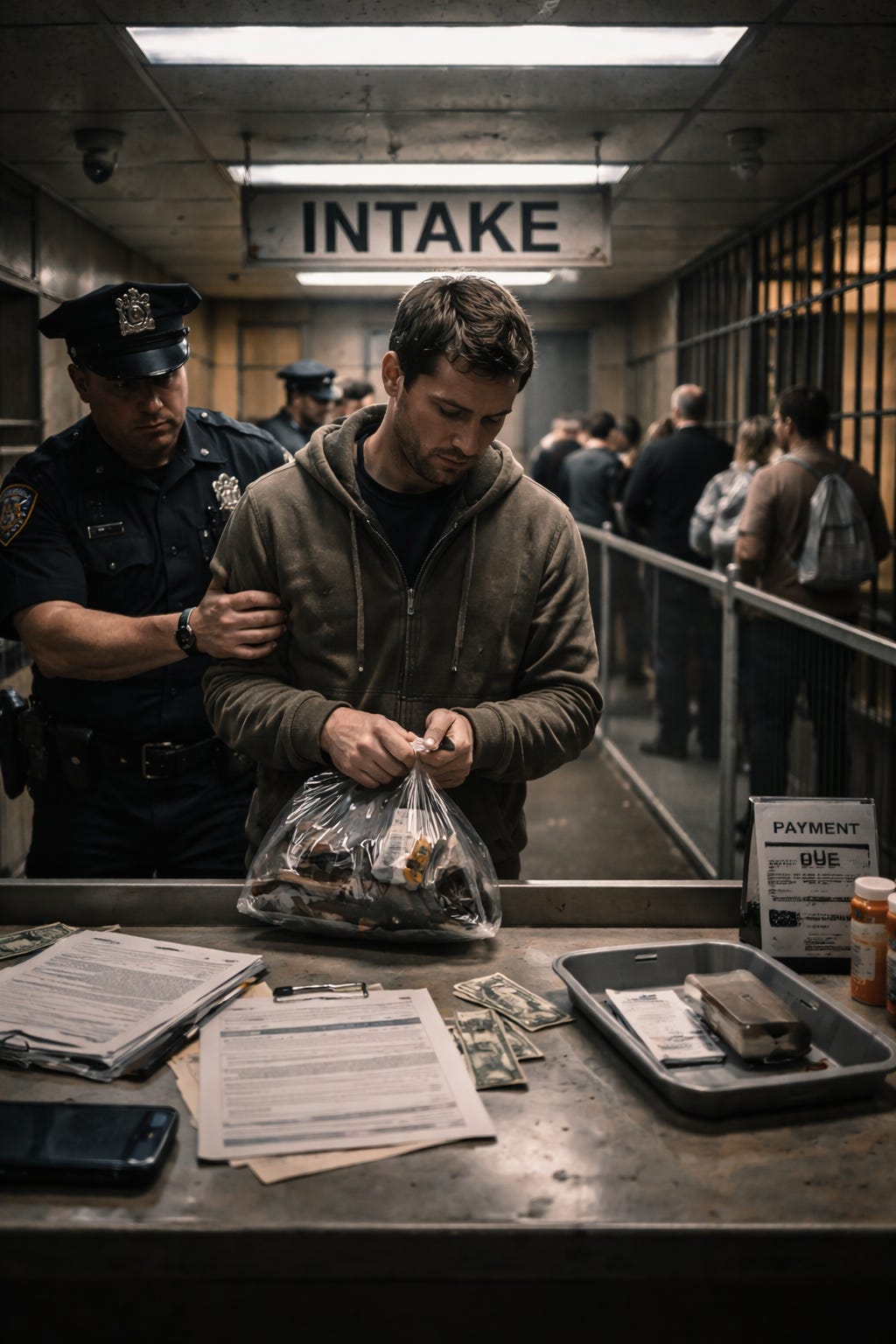
A functional society should make help easier to reach as need increases. It should not become more punishing, more humiliating, more suspicious, or more difficult to survive just because someone has fallen farther behind.
That is not what we built.
In the United States, need is too often treated not as a reason for relief, but as a reason for scrutiny. The more a person needs, the more they are questioned, delayed, documented, doubted, monitored, judged, and made to perform worthiness for help that should never have required a performance in the first place.
That is the failure.
We are not helping. We are setting a baseline many people cannot maneuver or maintain, then punishing them for failing to clear it. We already know people need food, housing, medical care, rest, safety, treatment, childcare, transportation, stability, and time.
We can see it. The evidence is all around us. And still the public is made to justify and justify and justify the need, as though the problem were uncertainty instead of refusal.
That is what makes the whole thing so degrading. People do not come forward asking to be judged. They come asking for the basic conditions of life. And what meets them is a maze. Forms. Delays. Interviews. Proofs. Requirements. Waitlists. Renewals. Investigations. Conditions. Deadlines. Technicalities. Means tests. Compliance demands.
Eye contact that already says no before the words arrive. The message is unmistakable. Need more, and you will be trusted less. That logic runs through everything. Welfare. Disability. Housing. Healthcare. Education. The courts. Public aid. Private charity.
Everywhere help is supposedly available, the people under the deepest strain are too often the ones forced to crawl the farthest to reach it. Meanwhile, money buys speed. Stability buys credibility. Fluency buys ease. Connections buy softer landings. The people most insulated from collapse face the fewest barriers. The people closest to the edge are made to prove they deserve not to fall.
That is not support. That is punishment organized as procedure.
And it is not cheaper. If the goal were actually stability, we would have funded it by now. It is cheaper to meet need early and fully than to drag people through delay, collapse, emergency response, administrative friction, and generational damage. What we fund now is not the affordable option. It is the punitive one.
And the humiliation is not incidental. It is part of the design. The waiting, the proving, the repetition, the endless need to explain what is already visible, all of it trains people downward. It teaches them to beg softly, ask carefully, expect less, and accept insult as the price of survival.
We have built systems where people stand in line, hand out, taking the kick to the jaw and saying more please, because the alternative is to risk losing even the little they might still receive. That is not dignity. That is domestication through scarcity.
We have turned public need into Oliver with the bowl, asking for one more scrape of survival from institutions that behave as though mercy itself has become an unreasonable demand. Life is supposed to be sacred. Here, it too often falls last on the list, somewhere behind compliance, cost control, image management, and the comfort of people far enough from the edge to mistake cruelty for discipline.
And while the poor are made to perform worthiness, the wealthy move through an entirely different world. A rich person dressed plainly may still be read as relaxed, eccentric, or important. A poor person dressed the same way is more likely to be read as suspect, disposable, or out of place. The line is never just about rules. It is about who is presumed to belong, and who is presumed to owe an explanation.
That presumption sits at the center of the arrangement. Some people are met as citizens, customers, donors, or decision-makers. Others are met as burdens, risks, drains, and possible liars. Need does not soften the gaze that falls on them. It hardens it.
That is why the system rewards advantage so reliably. The person with money can pay for help, pay to skip the line, pay for expertise, pay for representation, pay for flexibility, and pay to make inconvenience disappear. The person without money gets process instead of relief.
Delay instead of response. Suspicion instead of care. Barriers instead of help. The public is told this is fairness because everyone faces rules. But rules do not operate equally inside unequal conditions. A gate is not the same thing to the person standing on solid ground as it is to the person trying to hold on at the cliff edge.
That is the lie hidden inside so much American talk about responsibility. The country pretends to test character when it is really rationing ease. It pretends to evaluate merit when it is really protecting comfort. It pretends to distinguish the deserving from the undeserving when it is really deciding whose suffering will be treated as administratively inconvenient and whose will be absorbed without question.
And this does not stop with the adult in line asking for help. The structure reaches into family life, childhood, and stress carried across generations. When a system punishes need, it does not only wound the person seeking relief. It takes from their children too. Time. Stability. Food. Calm. Trust. Attention. Hope.
The theft is not always dramatic. Sometimes it is the slow grinding away of everything a family needed to stay upright. Then the same society looks at the damage and asks what is wrong with them. That question is its own cruelty.
What is wrong is that we built a system where need itself became liability. Where the people most in need of protection are often the first ones treated like threats to the order of things. Where asking for what keeps a human being alive becomes an invitation to be doubted, monitored, diminished, and delayed.
That is the Failure Point.
The failure is not merely that help falls short. The failure is that help is too often structured to become harder to reach the more urgently it is needed. The people with the least margin are forced to absorb the most friction. The people with the most advantage move through the fewest barriers. That is not competence. That is not justice. That is not care.
It is a society that treats need as evidence against the person who has it. There is no moral defense for that.