

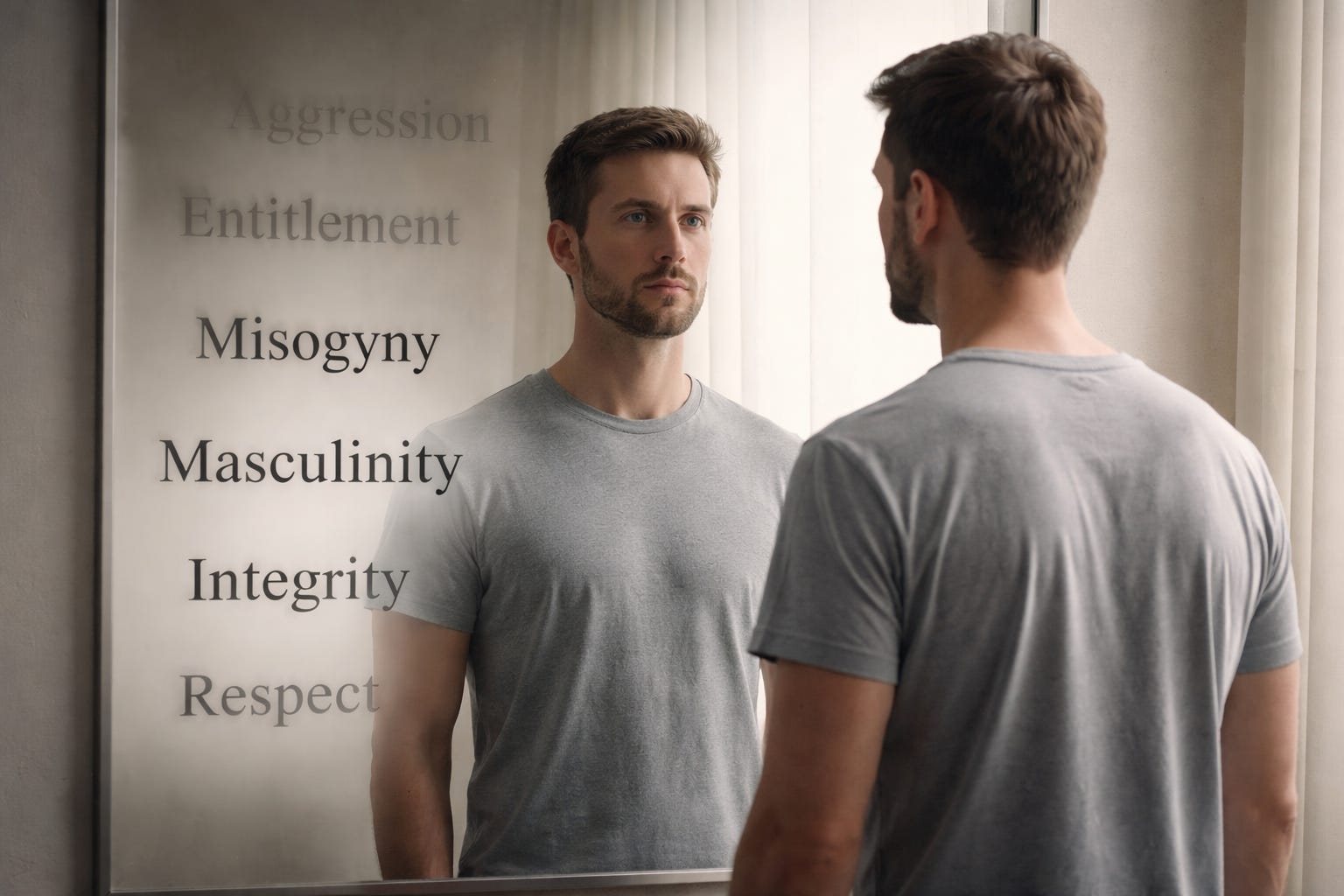
“Toxic masculinity” has become one of the most common cultural diagnoses of the last decade. It appears in headlines, classrooms, podcasts, and comment sections. It is meant to name something harmful. But it is rarely defined.
When it is not defined, too much collapses into it. Masculinity itself is not toxic. What is toxic are the behaviors we refuse to name precisely: misogyny, domination, entitlement, and the expectation that men suppress emotion while women absorb everything else.
When distinctions blur, clarity disappears.
Identity vs. Behavior
There is a difference between masculinity and harmful norms. Masculinity can include strength, steadiness, protectiveness, ambition, restraint, devotion, humor, and tenderness. None of these traits are inherently destructive.
What becomes destructive are specific learned behaviors. Behaviors such as emotional illiteracy, entitlement to women’s’ labor or bodies, dominance as proof of worth, silence mistaken for strength, and aggression mistaken for confidence. They are socialized. They are reinforced. They are correctable.
When we label the whole instead of the behavior, men hear condemnation of identity rather than critique of conduct. Conversations shut down. Defensiveness rises. Nothing improves. Language matters because people respond to what they believe they are accused of: identity or behavior.
The Collective Loop
These norms are not upheld by men alone. Women sometimes reinforce them by over-functioning emotionally, mothering partners instead of requiring growth, absorbing conflict to keep the peace, expecting provision without shared responsibility.
Men reinforce them by policing vulnerability in each other avoiding emotional work, conflating stoicism with maturity, measuring worth through dominance or income
Media amplifies caricatures of both. This is not a villain story. It is a feedback loop. Feedback loops do not break when the parts are misnamed.
What Happens When We Misname It
When misogyny is not named as misogyny, it hides. When entitlement is not named as entitlement, it persists. When emotional suppression is not addressed directly, boys grow into men who struggle to articulate need, fear, loneliness, or tenderness. That suppression has consequences.
We now speak of a male loneliness epidemic marked by declining friendships, relational isolation, and disengagement. Loneliness does not emerge in isolation. It develops where vulnerability is punished, communication is underdeveloped, and connection becomes transactional.
If boys are taught that expressing fear weakens them, and men are told that needing intimacy diminishes masculinity, isolation is predictable. Misnaming the problem does not change the outcome.
Precision as Accountability
If the goal is healthier masculinity, precision is required. Call misogyny what it is. Call domination what it is. Call emotional illiteracy what it is. Call entitlement what it is. Do not call masculinity itself toxic.
Precision invites accountability. Vagueness breeds resentment. If the aim is better men, better women, and better relationships, identity must not be collapsed into behavior. Clarity is responsibility.