

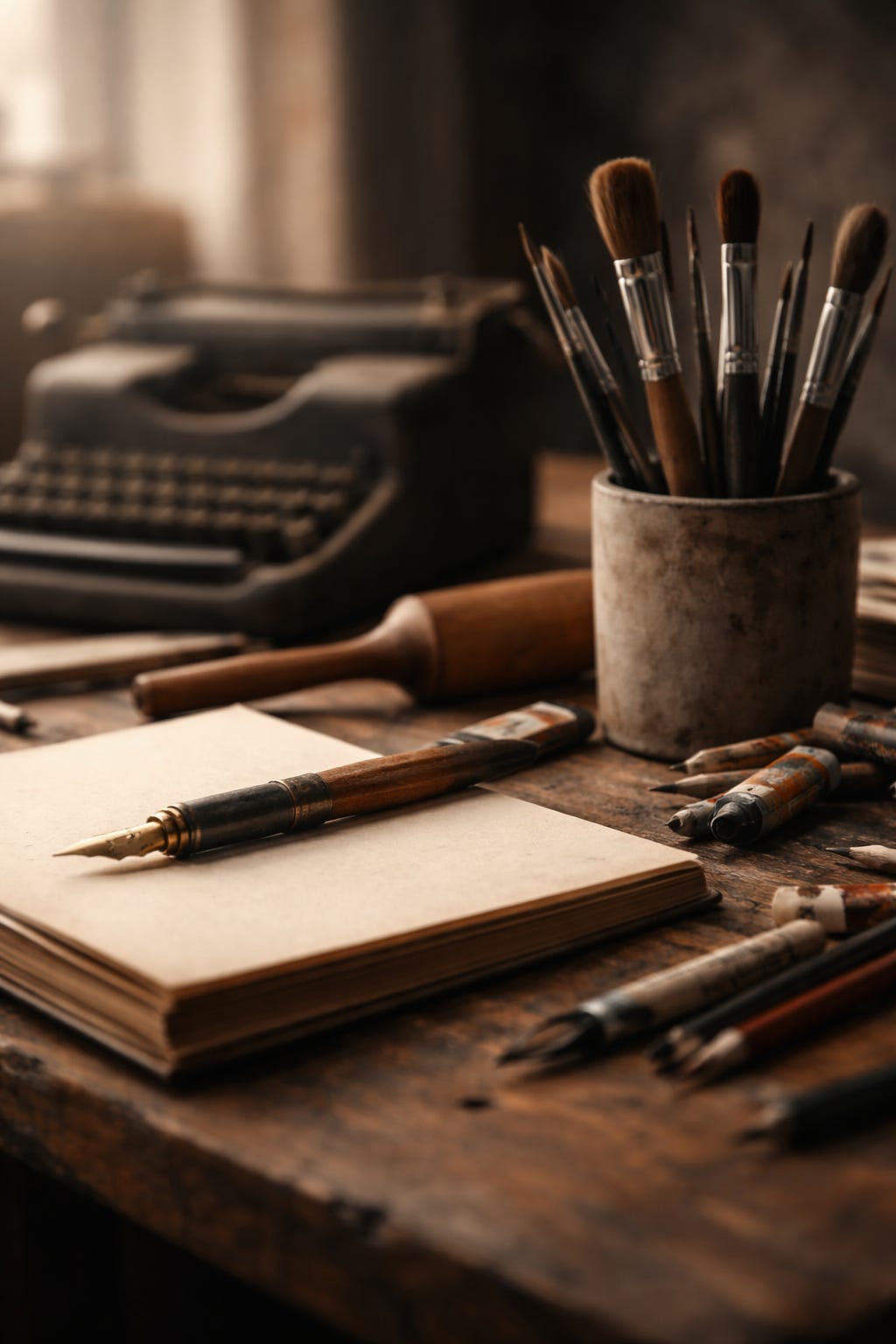
Every time a new tool changes how humans create, the same panic follows. It happened when photography emerged. Painters feared art would die. It did not. It evolved. It happened when word processors replaced typewriters. When spellcheck appeared. When digital art reshaped studios. When sampling transformed music.
Each time, the argument sounded the same, this will ruin authenticity, erase skill, cheapen creativity, and hollow human expression. And each time, history proved otherwise.
What new tools remove is not thought. They remove friction. They make it easier to execute ideas. They lower the barrier between imagination and expression. They shift the work from mechanical effort to judgment, clarity, and intent.
That shift is what makes people uncomfortable. Because when friction drops, what remains is substance. If ideas are shallow, tools reveal that quickly. If ideas are layered and human, tools help them move faster.
Identity does not live in how hard something was to produce. It lives in what we notice, what we value, what we emphasize, and what we leave behind. No tool decides meaning. No tool holds perspective. No tool carries lived experience.
Those have always been human. Yet every cycle of change is reframed as a moral crisis. Not about efficiency. Not about access. But about purity. As though struggle were the source of authenticity. As though typing slower made ideas deeper. As though friction were a virtue rather than a limitation.
What many people are reacting to is not the loss of creativity. It is the loss of exclusivity. When creation becomes easier, more voices enter the room. People who think deeply but struggled with execution can finally express themselves. People who had ideas but not resources gain tools.
That feels like erosion to those who benefited from the old gates. But accessibility has never destroyed art. It has always expanded it. Tools do not erase identity. They reveal whether there was one there to begin with.
They do not replace thinking. They demand more of it. Because when the mechanical work fades, what remains is discernment, the most human skill of all. History keeps teaching this lesson. We do not lose humanity when we adopt new tools. We simply stop confusing effort with meaning.