

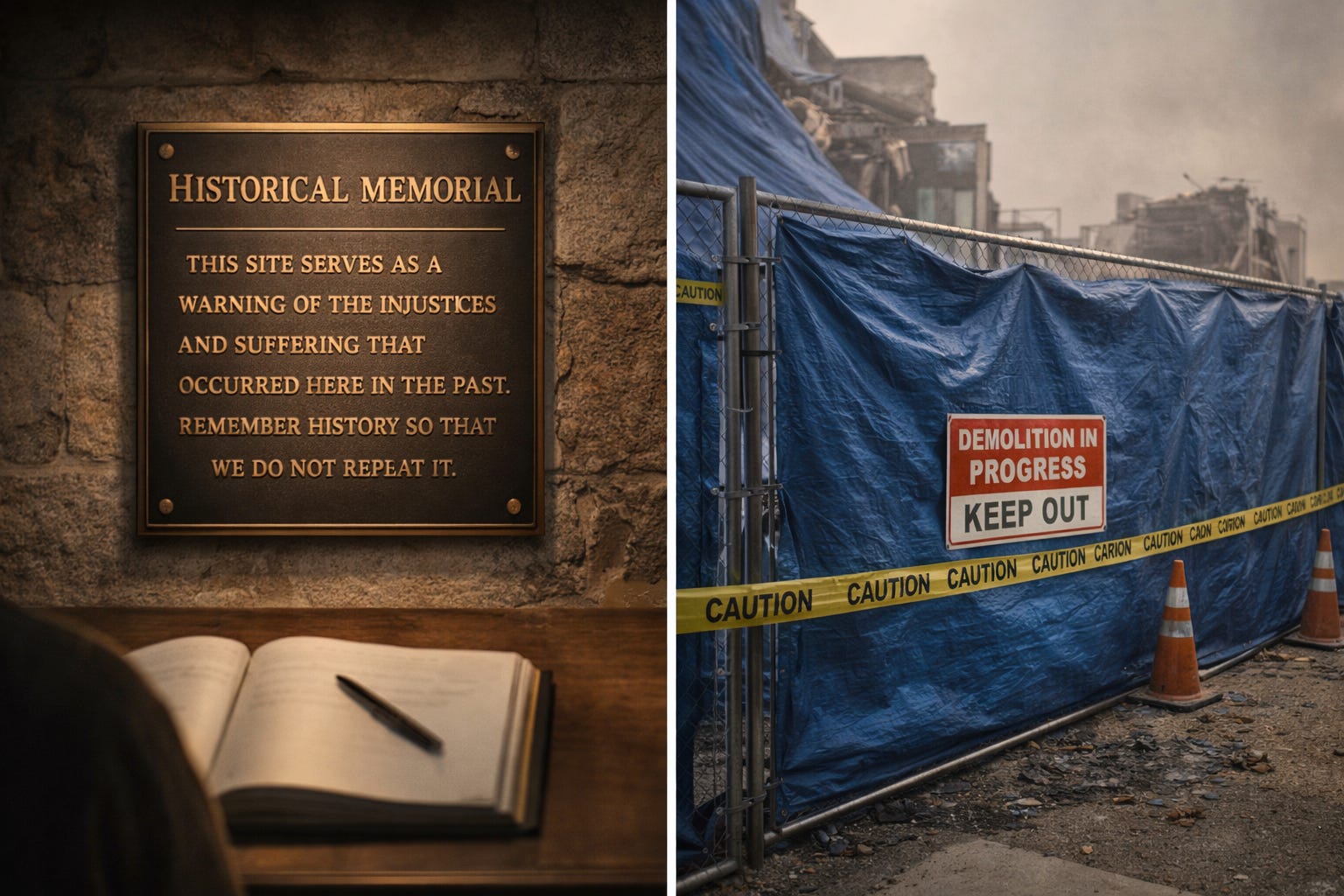
We often say that removing statues, renaming buildings, or questioning historical figures is an attempt to erase history. I am not sure that is what is happening. It seems more like we are struggling with how to hold discomfort across time.
When the past is presented only through honor and celebration, it teaches something quietly. That harm can be absorbed without reckoning, that progress requires no repair, and that suffering eventually becomes decoration.
But history has never worked that way. Memory is not just about what happened. It is about what we choose to carry forward without question. Warnings are not erasure. They are context. They say: this mattered, and it hurt, and it shaped what came next.
When we mark the uncomfortable parts of our history, we are not trying to undo the past. We are trying to understand it more honestly. We are acknowledging that greatness and harm often lived side by side and that ignoring one distorts the other.
Every generation inherits the stories it is given. If those stories only celebrate power and success, they teach silence around consequence.
Perhaps the tension we feel is not about losing history. Perhaps it is about learning it more fully than we ever have before. And perhaps discomfort is not a sign that something is being erased, but that something long unexamined is finally being seen.