

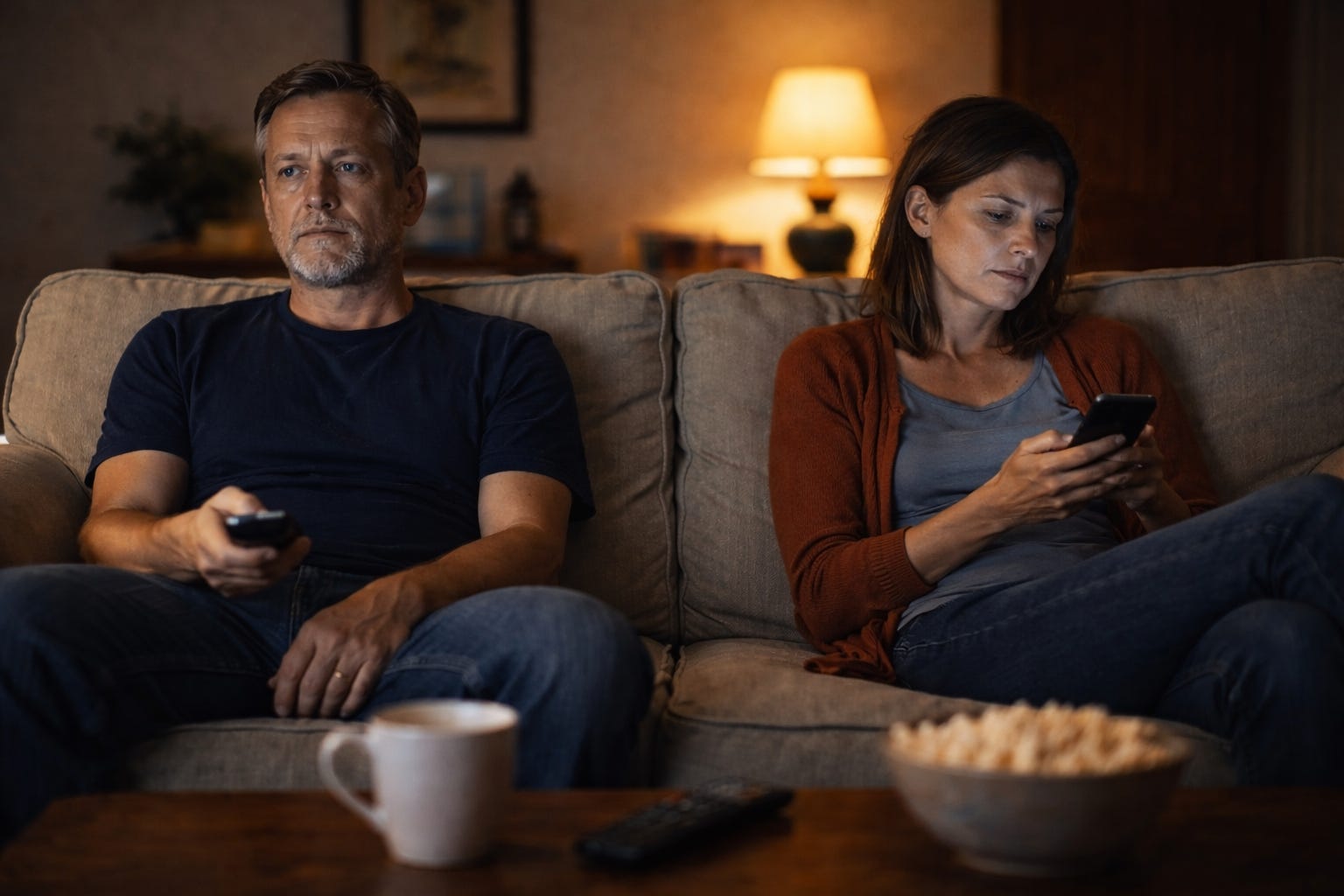
I understand why votes are private. That protection matters. What I am less sure about is when our views became private too.
If we do not talk about the issuea, if we do not examine them together, test them, sit with disagreement, then what exactly are we voting on?
I do not ask that rhetorically. I ask it honestly.
When beliefs remain unspoken, deliberation has nowhere to happen. There is no shared language to refine ideas, no space to challenge assumptions, no opportunity to notice where certainty might be standing in for understanding.
Something still has to guide the decision, though. Silence does not remove influence; it just changes its form. In the absence of discussion, emotion fills the gap.
Emotion is not the problem. It is human. It tells us what matters, what feels threatened, what feels hopeful. But when emotion is not examined—when it is not named, questioned, or tempered by conversation—it becomes a shortcut rather than a signal.
Identity steps in. Loyalty. Fear. Familiar stories. The feeling of being on a side.
Without shared deliberation, voting becomes less about choosing among ideas and more about expressing alignment. Not what do I think, but who am I with.
I do not think this makes people irrational. I think it makes them human in a system that no longer gives thinking a public place to happen.
We did not lose the right to vote. We lost many of the spaces where deciding together was practiced.
I am still wondering what it means to make collective decisions without collective examination—and what it costs when emotion has to carry that weight alone.