

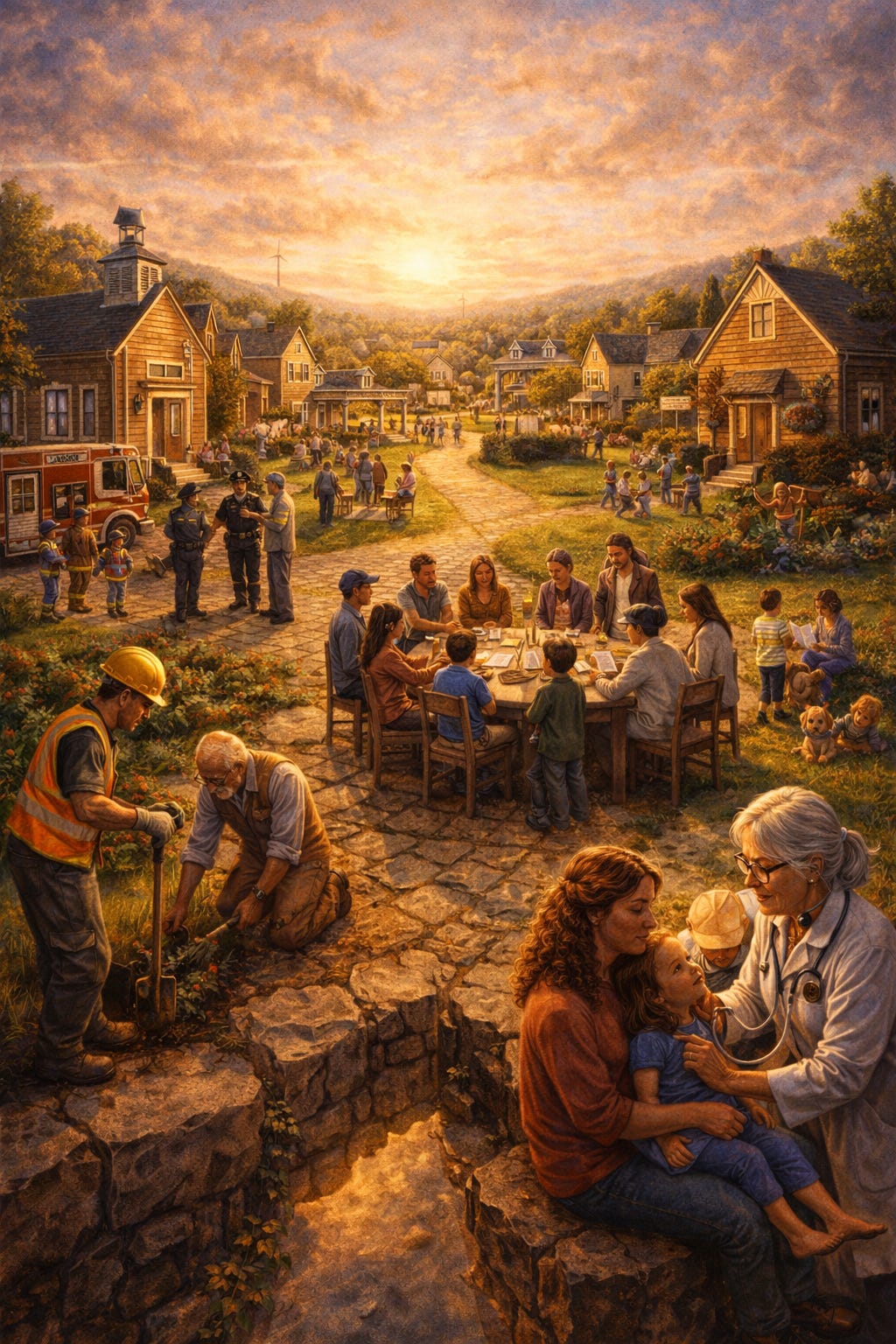
This closing document does not argue for adoption, promise savings, or claim perfection. It names patterns that consistently emerge when basic human needs are met as a matter of structure rather than charity.
The Shift from Management to Prevention
Much of what modern societies spend money managing exists because basic needs are unmet or made conditional. When food, housing, healthcare, income stability, education, and care are structurally guaranteed, entire categories of crisis response shrink. Not through enforcement, but through absence of cause.
Crime and Harm
Most crime is not driven by malice but by pressure: scarcity, instability, untreated trauma, and exclusion. When needs are met, the following patterns consistently appear:
· Significant reduction in property crime tied to survival and desperation.
· Lower rates of violent crime associated with stress, instability, and untreated mental health needs.
· Reduced recidivism as survival behaviors no longer require criminalization.
· A shift in public safety resources from punishment to prevention and mediation.
· Greater cooperation with community norms when people are not excluded from them.
Public Safety Without Expansion of Force
Meeting needs does not eliminate the need for public safety. It changes its role. When people are housed, fed, cared for, and included, safety systems focus less on containment and more on protection.
Administrative Simplification
When access to necessities is universal, layers of eligibility policing, surveillance, and compliance auditing become unnecessary. Systems designed to assume bad faith are among the most expensive to operate.
Health, Education, and Long-Term Stability
Stable access to healthcare, education, and care across the lifespan reduces emergency interventions, improves cognitive and physical outcomes, and lowers long-term public cost without requiring behavioral enforcement.
What Does Not Disappear
This framework does not eliminate hardship, conflict, or human error. It does not promise a society without crime or struggle. It removes predictable, manufactured failure created by scarcity and exclusion.
Closing Orientation
This framework does not promise efficiency. It promises coherence. Coherent systems cost less not because they are optimized, but because they stop producing damage that must later be managed.
We are living life not existing inside a maze built to keep people chasing scraps.
This framework exists to end systems that reward exhaustion, punish vulnerability, and confuse survival with purpose, replacing them with structures that support living, participation, and shared care.