

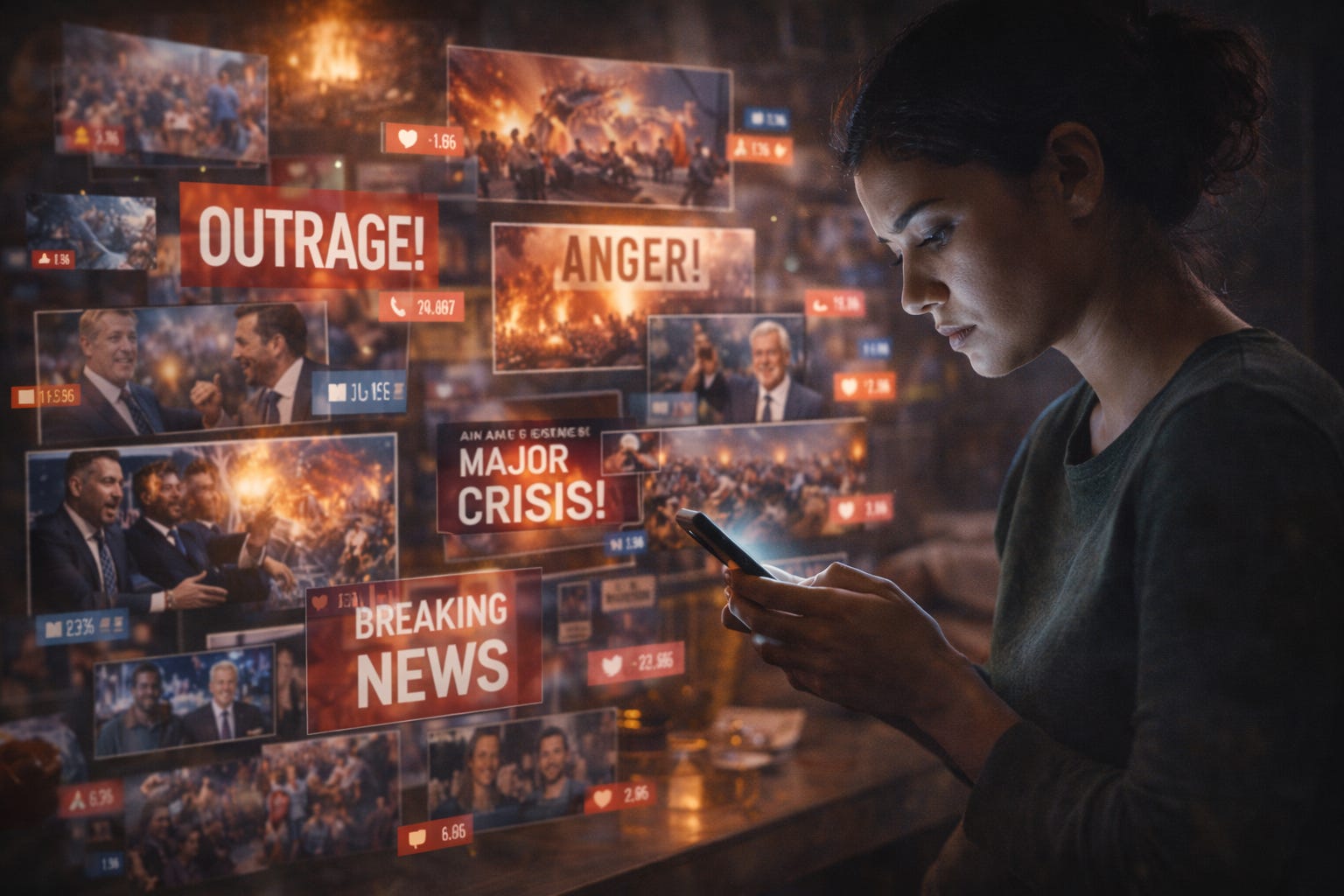
Once spectacle replaced substance, something else quietly followed. Outrage became the engine. Moments were no longer simply reported. They were shaped to provoke reaction. Headlines sharpened. Clips were selected for impact. Language grew more extreme. Not to inform. To engage.
Anger spread faster than context. Shock traveled farther than explanation. Slowly, outrage became a form of participation. To be upset meant to be involved. To react meant to be aware. To share meant to take a stand. The feeling of intensity began to substitute for understanding.
Serious issues were no longer just problems to solve. They became emotional events to consume. Each day brought a new target. Each moment demanded a response. Each outrage replaced the last before it could be processed.
In this environment, calm voices struggled to be heard. Outrage was louder. Outrage was quicker. Outrage felt powerful. But outrage is exhausting by design.
It surges, burns hot, and fades, leaving little behind except the need for the next emotional hit. Over time, many of us stopped asking what would actually change. We focused instead on what would make us feel something.
Anger became content. Conflict became entertainment. Reaction became routine. And when outrage becomes the main way people engage, depth quietly disappears.
There is no space for long-term thinking in a constant emotional sprint. No room for solutions when attention keeps jumping. No patience for complexity when the next flashpoint is already arriving.
What once stirred people to act now simply keeps them watching. Outrage begins to feel productive, even when nothing moves. And the louder the anger grows, the easier it becomes for real accountability to slip away. Because while people are busy reacting, systems remain unchanged.
Perhaps the problem is not that people care too much. Perhaps it is that caring has been turned into a cycle of endless emotional response with no space for reflection, learning, or repair. When outrage becomes entertainment, it stops being a tool for change. It becomes another form of distraction.