

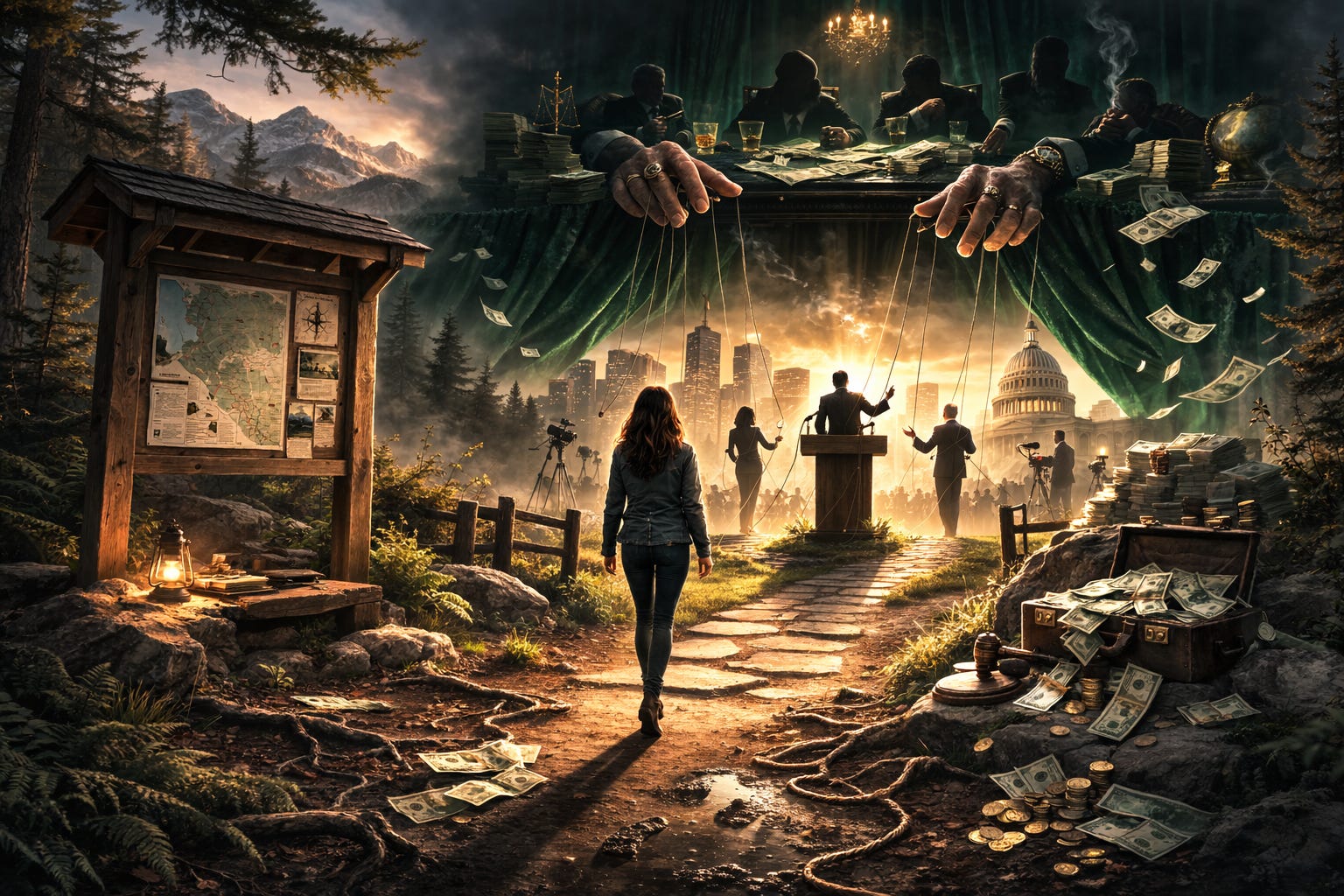
Most people imagine corruption as something loud. A bribe. A scandal. A villain caught in the act. But modern power rarely looks like that.
It looks like policy. It looks like complexity. It looks like rules that only specialists understand. It looks like decisions made far from public view. The most effective power does not announce itself. It embeds.
When corporations grow large enough to shape regulation, oversight becomes negotiation. When wealth concentrates enough to influence elections, representation becomes selective. When systems become complex enough to discourage public participation, governance becomes insulated.
Nothing illegal has to happen. The structure does the work. Power no longer needs to coerce directly. It guides incentives, access, and outcomes quietly. Who gets loans. Who pays penalties. Who receives bailouts. Who absorbs risk. These patterns feel like economics. They are also governance.
Over time, the public is taught to argue about personalities instead of structures. Outrage becomes cultural while control remains procedural. The loud conflicts distract from the quiet consolidation. This is why harm can grow even during periods of intense political debate.
The arguments are real. The power shift happens elsewhere.
When people feel something is wrong but cannot point to a single culprit, it is usually because the system itself has become the actor. Not tyrants. Design. And once power is embedded in structure, changing leaders alone cannot undo it.
This is the moment societies reach before real transformation. When the question shifts from,“ Who is doing this?” to: “How is this built?”
What you describe is a form of legal plunder. The best place to hide a forest is within someone else's forest.