

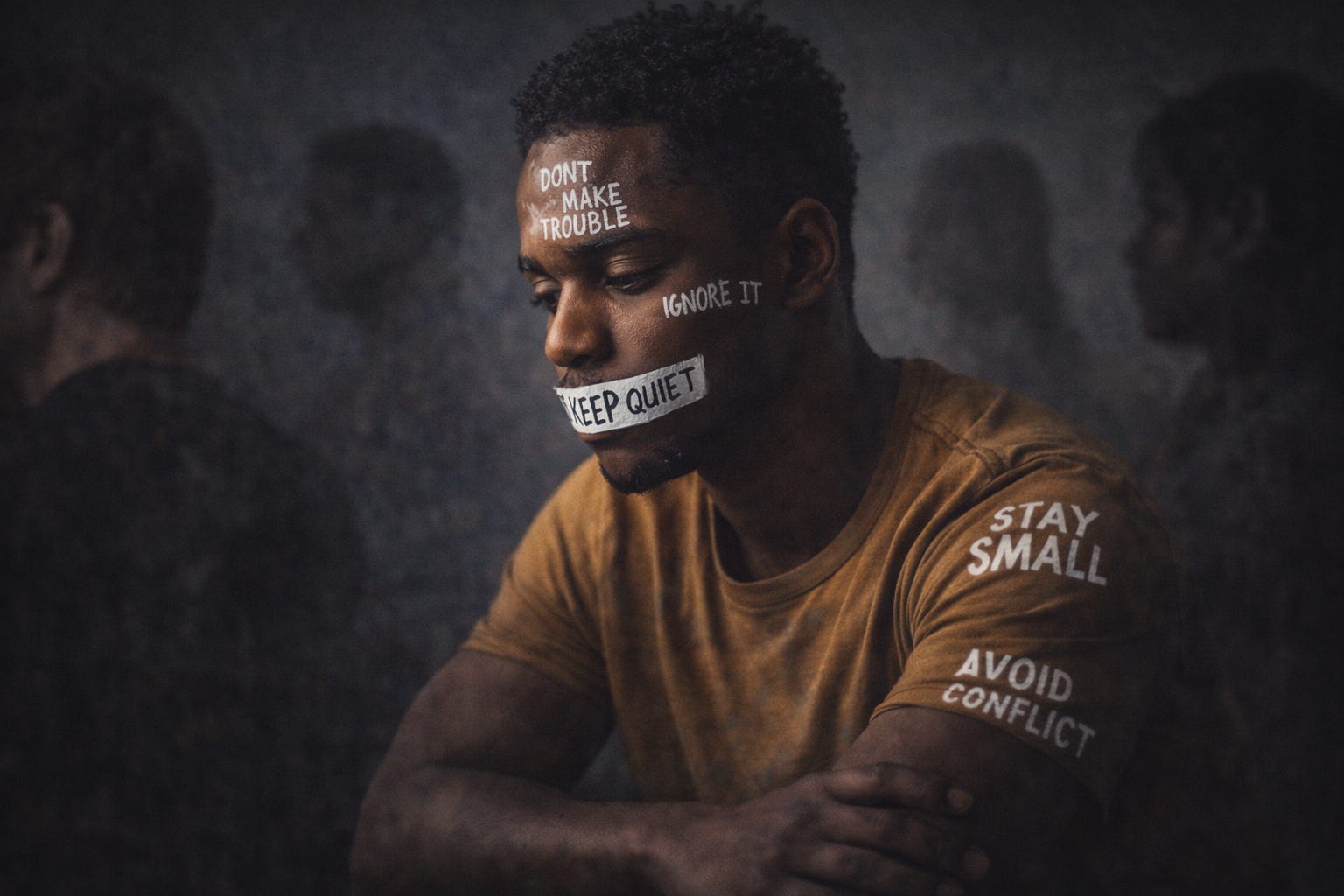
Many people are raised to believe that systems exist to protect them.
That if harm happens, reporting leads to care. That rules create safety. That institutions correct wrongdoing when it is named. It feels reasonable to trust this. It feels like the foundation of a just society.
But that promise was never extended evenly. For many women, LGBTQ people, disabled men, and people of color, speaking does not bring protection. It brings scrutiny. Doubt. Retaliation. Reputation damage. Silence.
The harm does not end with the original act. It is followed by a second injury delivered by the system itself. Questions become accusations. Process becomes punishment. Credibility becomes conditional.
What is offered as justice in theory becomes another form of vulnerability in practice.
These systems were built on assumptions about whose pain is legitimate, whose word is trusted, and whose harm deserves response. When those assumptions are not met, the structure does not adapt. It resists.
The result is quiet lessons learned over time. Safety is not universal. Protection is selective. Fairness is conditional. Yet many continue to operate as though the promise applies equally to everyone.
We wait for institutions to correct themselves. We trust that exposure leads to accountability. We believe the system will eventually see what it was designed to overlook. But neglect is not a malfunction. It is an outcome.
A system that routinely retraumatizes those who seek help is not broken in random ways. It is functioning according to priorities that were never meant to serve everyone.
The harm is not only what happens to people.
The harm is teaching them that silence is safer than truth.