

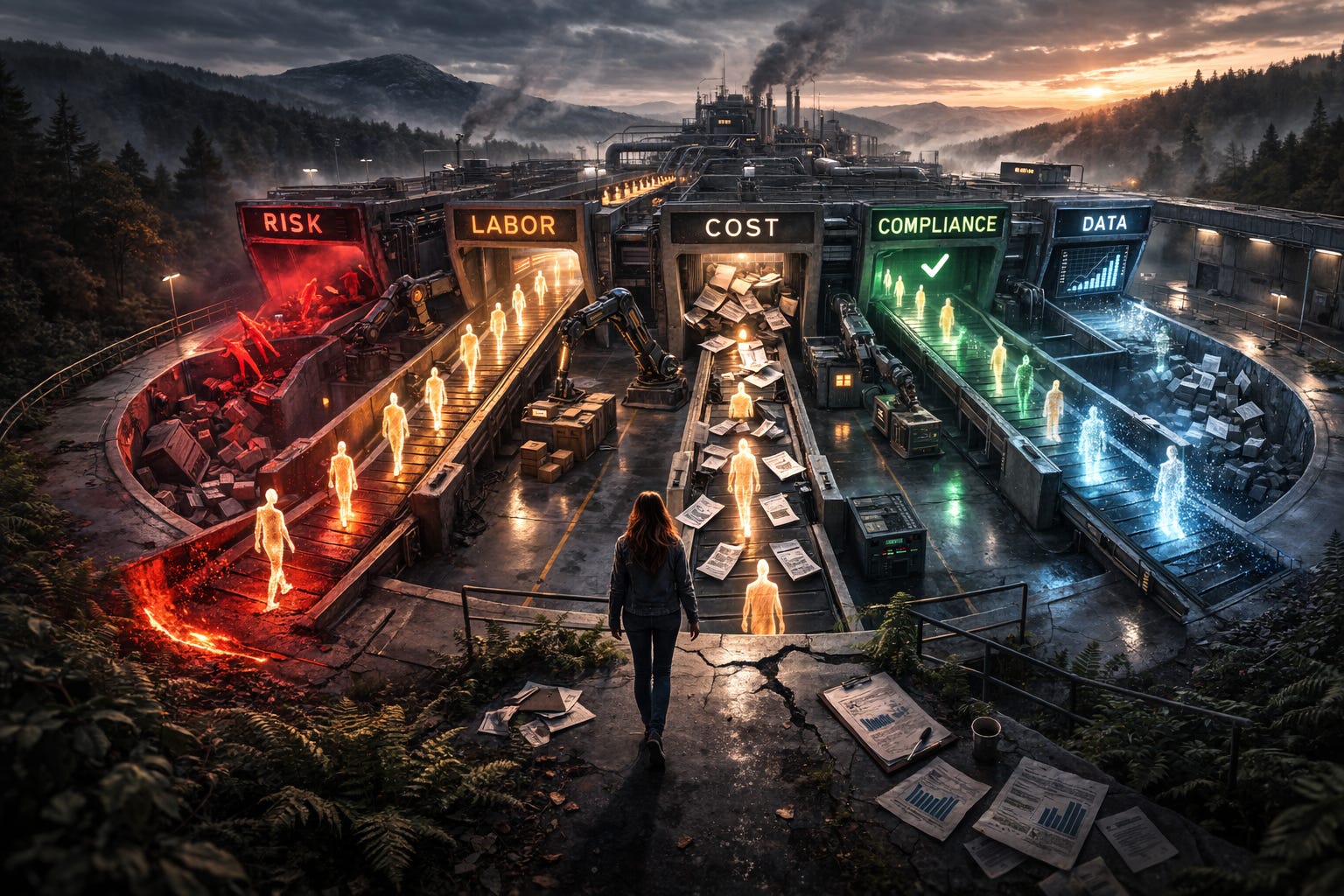
Most of the harm we live with does not begin as harm.
Healthcare was built to manage risk. Unemployment systems were built to provide stability. Inflation was built to keep economies moving. Corporations were built to organize production. Media was built to share information.
Each began with function. Each became distorted. Not because the ideas were wrong. Because the incentives surrounding them were. We tend to speak about failures as though they are moral surprises. As though greed, fear, short-term thinking, and power concentration appeared out of nowhere.
But these traits are not anomalies. They are predictable. Human beings seek advantage. They avoid loss. They respond to reward. They exploit loopholes. They concentrate power when allowed to. None of this is new.
What is new is building systems that pretend these tendencies will not shape outcomes. When profit is rewarded above well-being, extraction follows. When speed is rewarded above care, corners are cut. When scale is rewarded above accountability, harm spreads quietly. When concentration is rewarded above competition, power hardens.
The systems respond exactly as designed. Over time, tools become pressure points. Safeguards become obstacles. Public goods become private streams of revenue. And then we treat the results as unfortunate side effects.
But side effects imply accident. What we are experiencing is alignment of incentive and outcome. The uncomfortable truth is not that humans are flawed by nature. The uncomfortable truth is that we keep building structures that amplify those flaws instead of containing them.
Healthy systems assume human weakness and design around it. They distribute power. They limit accumulation. They reward long-term outcomes over short-term gain. They create transparency where secrecy invites abuse.
Fragile systems do the opposite. They concentrate. They obscure. They accelerate. They rely on trust where accountability is needed. When those systems fail, we argue about politics, personalities, and ideology. But underneath nearly every breakdown is the same design error: We built as though human nature would behave better than it historically does.
This is not cynicism. It is realism. And realism is where better systems begin.
Your distinctions between healthy and fragile systems are really good. When you describe fragile systems as relying on trust instead of accountability, that reliance is often short-term. Trust is a precious commodity. It "lubricates" the system like oil or grease eases the gears of a machine to work together. However, if it is taken for granted, like not changing the oil in a car, something will break down.